MY CO-PARENT COMPANION
How can separated parents communicate and make decisions without escalating conflict?
Designing My Co-Parenting Companion, a structured co-parenting support system built to reduce conflict and improve decision-making. The platform introduces guided communication workflows and an adaptive Healing Path that supports emotional regulation over time. My role spanned discovery, UX architecture, and high-fidelity product design.
Platform
iOS & Android (Concept)
Role
UX / UI Designer (solo)
Timeline
8 days (June 25 — July 3, 2025)
Tools
Figma • Stitch • Mobbin

Background
Translating an emotional vision into a structured product
A Product Manager brought me into a one-week sprint to design a mobile app that supports divorced or separated parents in co-parenting with greater structure and emotional safety. The client, a healthcare executive, wanted the product to feel calm, trustworthy, and empowering. The challenge wasn’t defining what to build. It was translating that vision into a clear, emotionally sensitive experience within a tight timeline.
The Challenge
Balancing emotional nuance with rapid delivery
With no user research, no testing, and just one week to deliver, the challenge was to turn an emotionally complex vision into something tangible and safe. The content covered high-stakes topics: custody, dating, sex, finances, and communication after separation, meaning tone mattered as much as functionality. The goal was to make technology feel empathetic, private, and empowering, not procedural or clinical.
Processs
Balancing structure, collaboration, and adaptability
I started by reviewing the PRD and design brief to understand the client’s goals, constraints, and emotional tone. After meeting with the Product Manager to discuss feature prioritization, user flows, and use cases, I defined the core flow architecture and began early ideation in Stitch.
Using Stitch to explore visual and tonal directions, I refined layouts, hierarchy, and UX copy in Figma. This workflow allowed for rapid iteration without rebuilding from scratch. Midway through the sprint, we presented the first prototype to the client and received positive feedback, along with new direction on visual tone.
Adrian and the client collaborated on a quick branding deck in Canva, which guided the final color and tone adjustments. I implemented the updated palette and styling refinements, ensuring visual consistency and emotional warmth. The deliverables, a high-fidelity prototype and component-based visual system, are now paired with Adrian’s pitch deck to help the client secure development funding.
Key Design Decisions
Designing for pace, privacy, and empathy across every touchpoint

Healing Path LMS
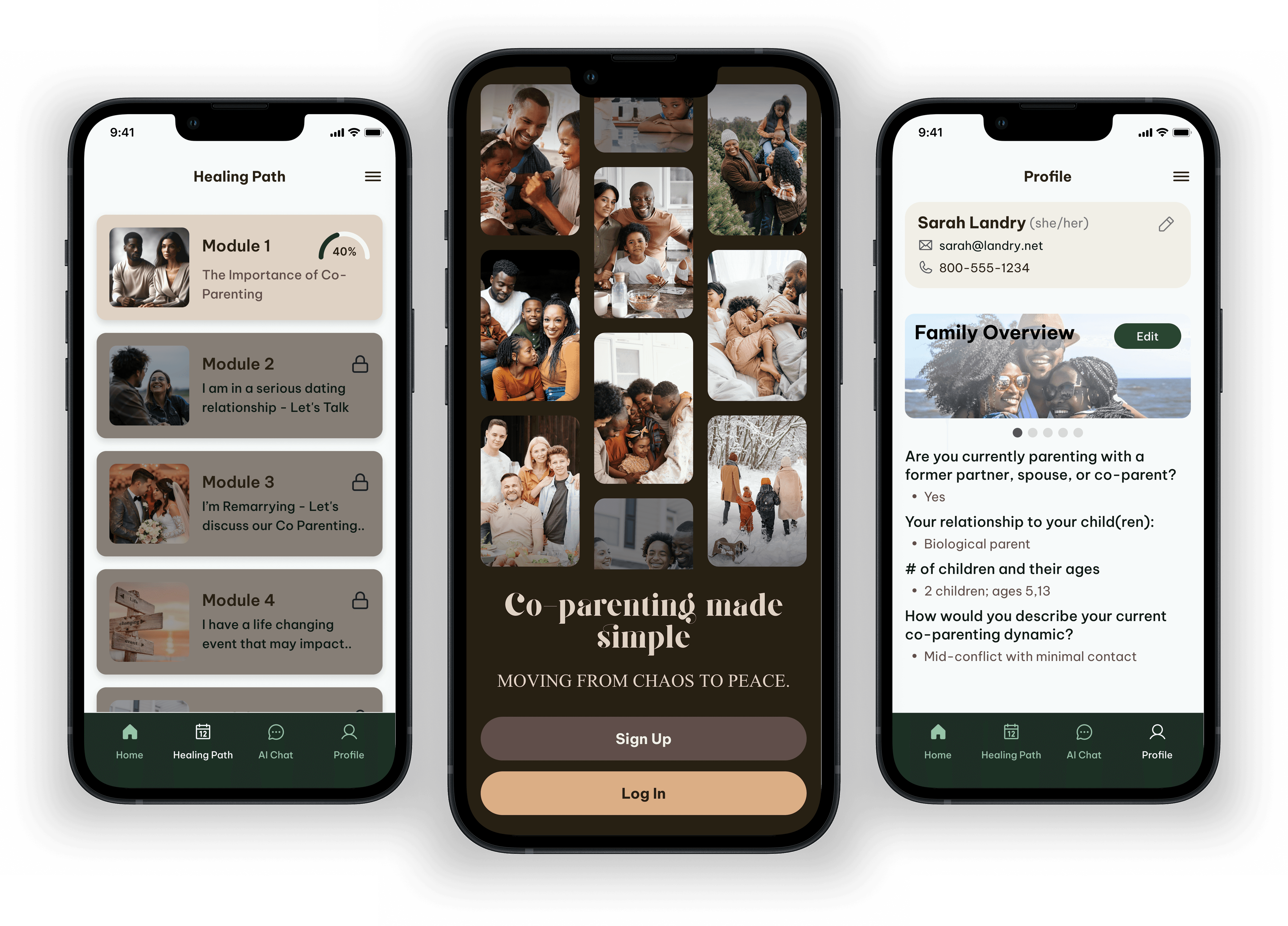
Modular learning cards guide users through 26 topics over a year, each with short videos, reflection prompts, and micro-actions. The pacing was intentionally gentle, encouraging steady progress over urgency.
AI Decision Companion
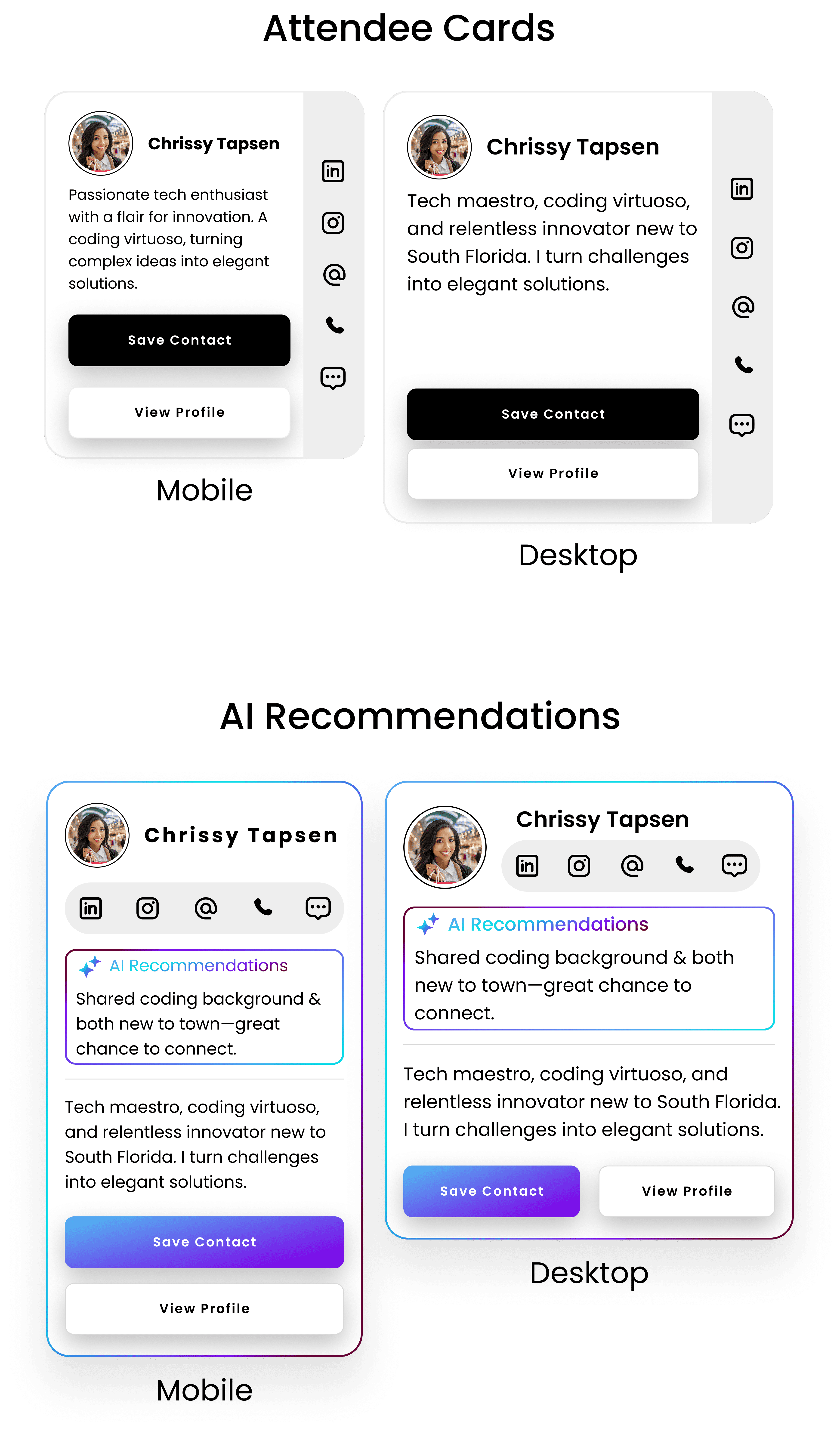
A private chat experience helps parents prepare for difficult conversations. To protect boundaries, no sharing or export options were included in the MVP.

Onboarding Flow
Designed to feel conversational and validating, it captures emotional status, spiritual preferences, and co-parenting goals, allowing the system to personalize module pacing and content tone.
Support Flow
Instead of generic “Help” options, the support form includes categories like “Preparing for a tough conversation,” signaling empathy and practical guidance even in microcopy.

Outcome
Delivering a calm, emotionally intelligent MVP in one week
The initial scope included 16 high-fidelity screens covering core MVP flows. After the first client review, the scope expanded to include the full onboarding experience and one complete Healing Path module. This brought the total deliverables to 35 functional screens and 7 UI states, all refined and finalized within eight days.
Reflection
Designing with constraints, not hypotheticals
This sprint forced me to design within real limits: time, scope, and the emotional sensitivity of the problem space. Instead of exploring ideal solutions, I had to prioritize clarity, feasibility, and impact. The experience sharpened my ability to make confident decisions, simplify when necessary, and move a concept forward without over-designing.